
Why only a handful of states really work for independent landlords
Run five filters over the map, one after another, and the country of fifty states collapses to three. Here is each filter and what it eliminates.
If you manage your own rentals, you do not have a regional acquisitions team or a legal department on retainer. A tenant who stops paying is your problem. A burst pipe at 2 a.m. is your phone ringing.
That changes which markets make sense. Five filters, applied in order, take fifty states down to three.
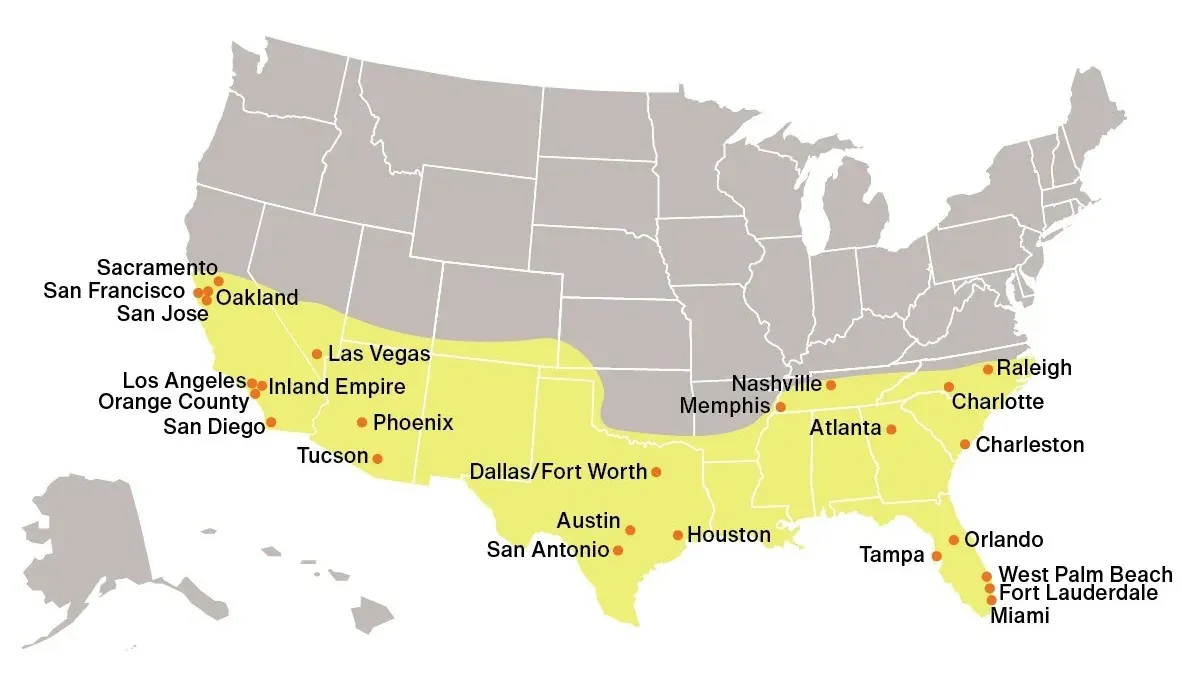
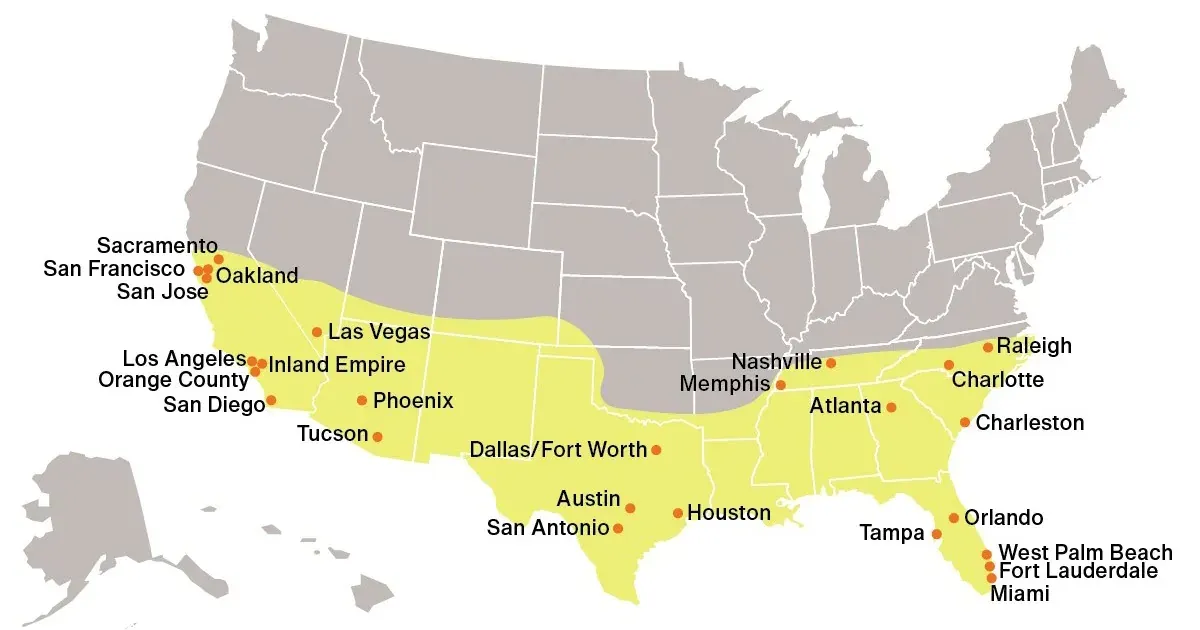
1. It has to be the Sun Belt
Start with the physical building, because it is the cost you cannot negotiate.
Freeze-thaw cycles are what destroy houses. Water gets into a crack, expands, and widens it, every winter, for decades. Add ice dams tearing at roof edges, snow load, frozen pipes, salt eating at concrete and driveways, and a heating system that has to work hard for five months a year.
None of that happens in Phoenix or Atlanta. Sun Belt properties still need roofs and HVAC, but the failure modes are gentler and slower, and there is no season where a single cold night can cost you a five-figure repair. For a landlord who fixes things by phone, predictable maintenance is worth more than a slightly better cap rate.
2. It has to be landlord friendly
The second filter is what happens when a tenant stops paying.
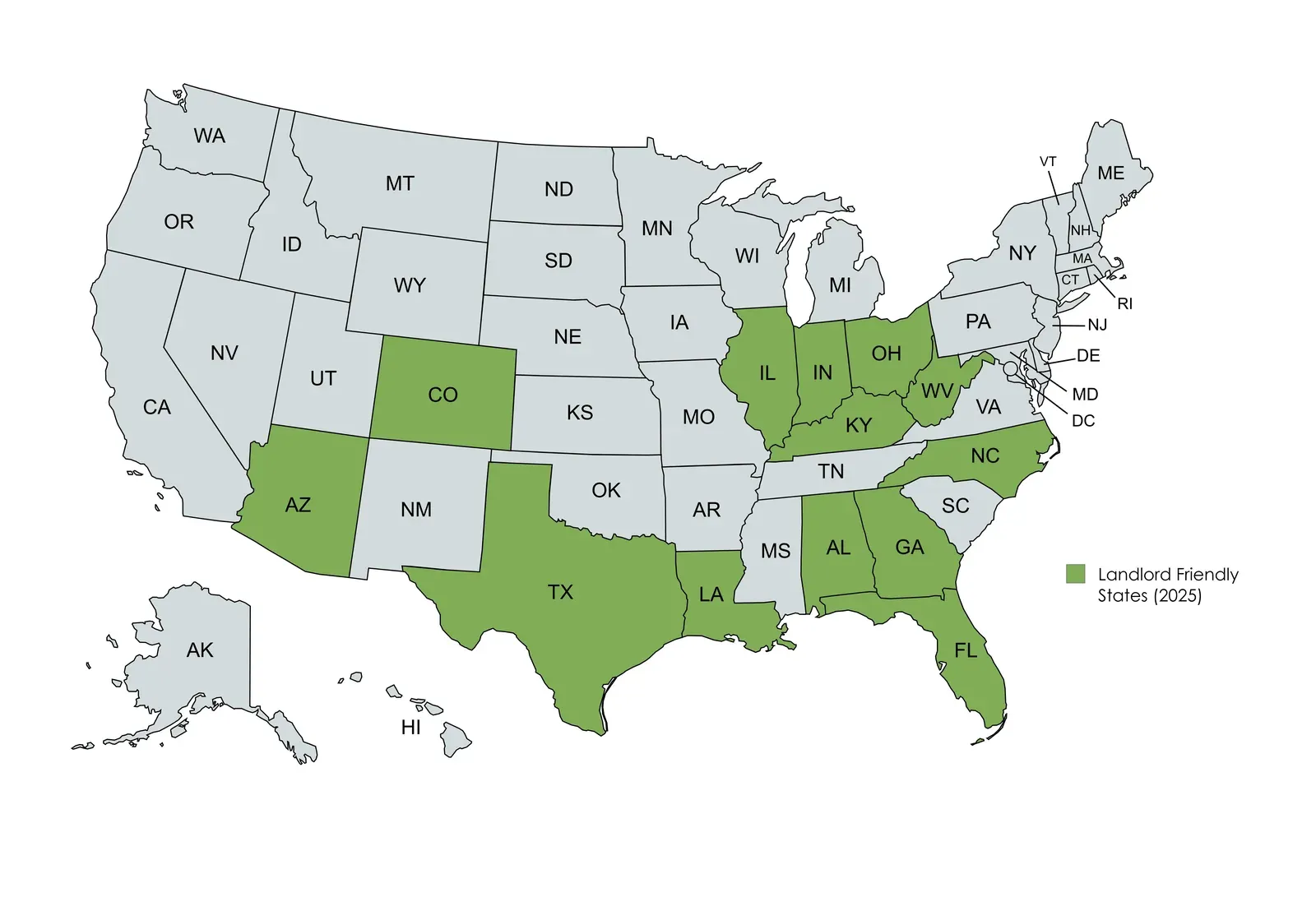
In a landlord-friendly state, that is a defined legal process measured in weeks. In an unfriendly one it is measured in months, sometimes many months, with mandatory mediation, right-to-counsel programs, and courts that reset the clock at every hearing. You are paying the mortgage for all of it.
Large operators absorb this as a line item. If you own three houses, one eviction that drags on for eight months can wipe out a year of returns across the whole portfolio. This filter is not about preference. It is about survivability at small scale.
3. It has to be growing
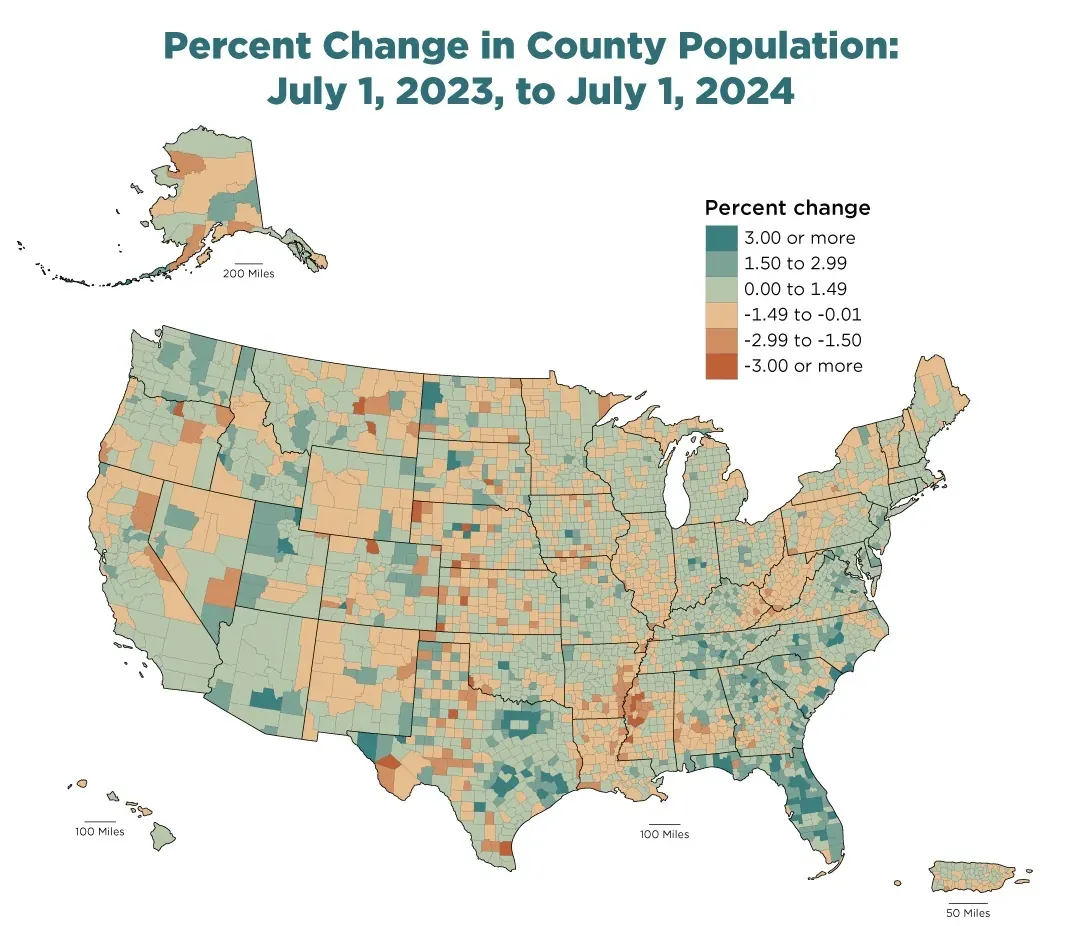
Rent growth is downstream of population growth. Nothing else reliably produces it.
You can improve a property, and you should, but you cannot manufacture demand in a county that is shrinking. In a place people are leaving, you compete on price, vacancies stretch out, and your pricing power is gone. In a place people are arriving, the market raises your rent for you.
Look at county-level change rather than state totals. States are not uniform, and plenty of growing states contain counties losing people steadily.
4. It has to have low property taxes
This is the filter that eliminates Texas, and it surprises people.
Texas checks the first three boxes convincingly: Sun Belt, strongly landlord friendly, one of the fastest-growing states in the country. But it has no state income tax, and that revenue has to come from somewhere. It comes from property.
Two things follow. First, a high effective rate is a permanent drag on cash flow, charged on assessed value whether or not the unit is occupied. Second, and less obvious, high carrying costs suppress appreciation. What a buyer will pay is a function of what the property costs to hold, so heavy annual taxes get capitalized into a lower price. You feel it twice: monthly, and again at sale.
Texas effective rates sit near the top of the national table, while Arizona is among the lowest and Georgia and North Carolina land close to the national average. Rates vary by county and by how each study measures them, so check the specific county before you buy.
5. The legal climate has to stay stable
The last filter is the one most lists ignore: is the state changing the rules on who is allowed to own property?
Florida is the cautionary case. Its SB 264, effective July 2023, restricts buyers tied to seven “countries of concern” from acquiring real property. The provision aimed at China is the broadest, barring Chinese nationals who are not US citizens or lawful permanent residents from buying most property in the state. Parts of it remain in litigation.
Whatever you think of the policy, the market effect is straightforward. Cutting off a segment of buyers reduces the pool of people who can purchase your property later, and exit liquidity is what your appreciation ultimately depends on. A state willing to legislate in this direction may not stop here, and that uncertainty is itself a cost.
What survives
Run all five and the map is nearly empty.
| Ruled out | Why |
|---|---|
| The Northeast and Midwest | Winter maintenance, and mostly unfriendly to landlords |
| California, New York, New Jersey | Eviction timelines, rent control, high entry prices |
| Texas | Property taxes, which cap both cash flow and appreciation |
| Florida | Ownership restrictions that shrink the future buyer pool |
| Tennessee, South Carolina, Alabama | Warm and cheap, but growth is concentrated in a few metros rather than statewide |
Arizona, Georgia, and North Carolina clear all five. Sun Belt weather, landlord-friendly law, real population growth, moderate property taxes, and no sign of legislating away their own buyers.
Three states out of fifty. That is the honest answer, and it is why chasing the highest advertised cap rate usually ends badly. Most of those returns are compensation for a risk you would be taking on alone.
Of the three, one is meaningfully better than the other two for an independent landlord starting out. That is the next post.
General information for landlords, not investment, tax, or legal advice. Property tax rates, landlord-tenant law, and ownership rules change and vary by county. Verify locally before you buy.