
Why Georgia beats Arizona and North Carolina for independent landlords
The last post narrowed fifty states to three. Here is why Georgia is the one to start in, and the two cases where Arizona or North Carolina is the better answer.
Last time, five filters took the country down to three states: Arizona, Georgia, and North Carolina. All three are Sun Belt, landlord friendly, growing, reasonably taxed, and stable.
They are not equally good. For a landlord buying their first few houses and managing them personally, Georgia wins on the things that matter most at small scale.
1. The entry point still exists
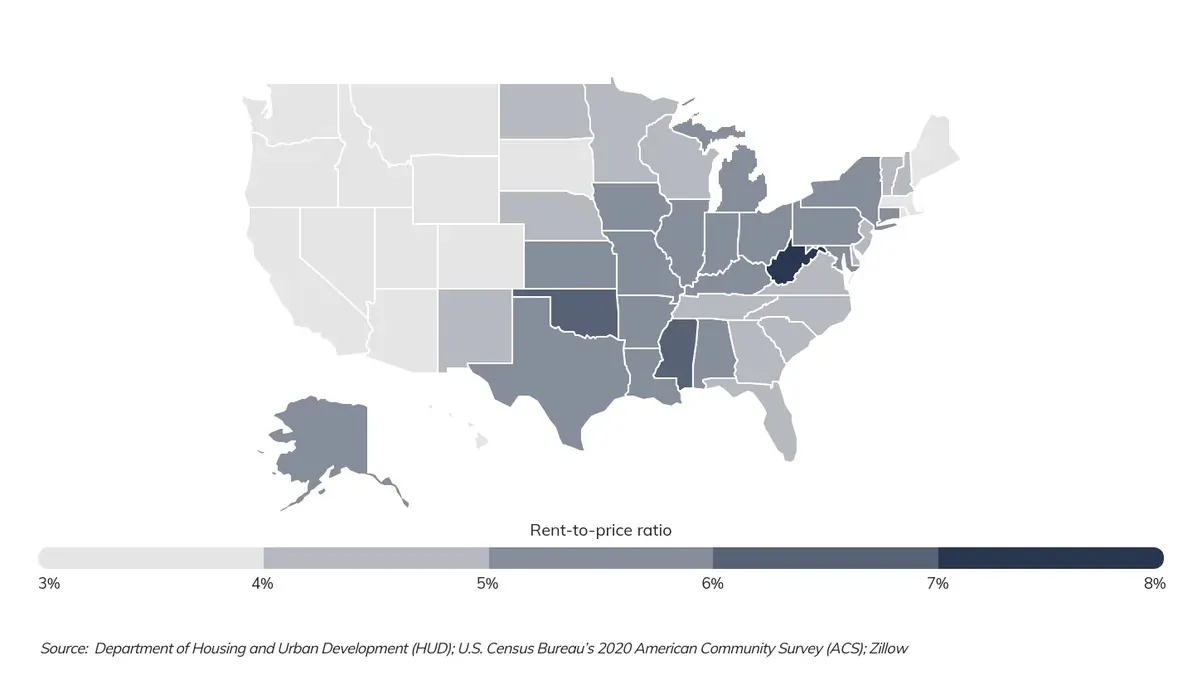
Cash flow starts with what you pay relative to what it rents for. The map above shows rent-to-price ratios by state, and it makes the West’s problem obvious: Arizona sits in the lowest band, under 4%. Georgia and North Carolina both land a band higher.
Statewide, Georgia and North Carolina look similar. The separation happens inside the states.
| Typical statewide price | Where the jobs are | |
|---|---|---|
| Georgia | ~$320k to $340k | Atlanta metro, but Clayton, Henry, Augusta and Savannah still start near $200k to $300k |
| North Carolina | ~$330k to $350k | Raleigh and Charlotte cores have largely cleared $420k |
| Arizona | ~$420k to $440k | Phoenix metro carries the whole state up |
That is the practical difference. North Carolina’s growth is concentrated in two expensive job centers, so the statewide average understates what you would actually pay to buy near demand. Georgia’s growth radiates out from one metro across counties that have not fully repriced yet. Investors commonly see 6% to 7.5% cap rates in Georgia’s secondary markets against roughly 4.5% to 5.5% in Phoenix.
Prices move. Check your specific county before believing any of these numbers.
2. The fastest eviction process in the country
This is Georgia’s clearest edge, and it is worth more to you than to a REIT.
Georgia requires no statutory waiting period before filing. You demand possession, and if the tenant does not pay or leave you file a dispossessory action immediately. Start to writ, an uncontested case commonly runs 21 to 35 days.
Compare the pre-filing clock alone: Arizona requires a 5 day notice, North Carolina a 10 day demand, and both typically run 30 to 45 days overall.
Deposits point the same direction:
- Georgia sets no cap on the deposit and gives you 30 days to return it.
- Arizona caps deposits at 1.5 months’ rent and gives you 14 business days.
- North Carolina caps at 1.5 months for month-to-month and 2 months for longer leases.
If you own 400 units, a slow eviction is a line item. If you own three, one that drags eight months can erase a year of returns across everything you own.
3. An economy that does not rest on one industry
Arizona leans on semiconductors, tourism, and retirees. North Carolina leans on tech and banking. Both are good sectors, and both are sectors.
Georgia spreads the risk. Atlanta is a logistics hub built around the world’s busiest airport plus the rail and interstate network feeding it, and the state hosts more than a dozen Fortune 500 headquarters, including Delta, Home Depot, UPS, and Coca-Cola. Layer on the CDC and Emory’s hospital system, one of the country’s largest film production industries, and an EV and battery supply chain pulling in Hyundai and SK.
Your tenants’ paychecks come from different places. That is what keeps a rent roll steady through a downturn in any one sector.
4. Holding costs, honestly
Property taxes favor Georgia over most of the country, though not over Arizona. Arizona is the cheapest of the three, North Carolina sits in the middle, Georgia is slightly above both while staying below the national average. Published effective rates disagree by methodology, so treat the ordering as the signal, not the decimals.
Insurance is where Georgia gives something back:
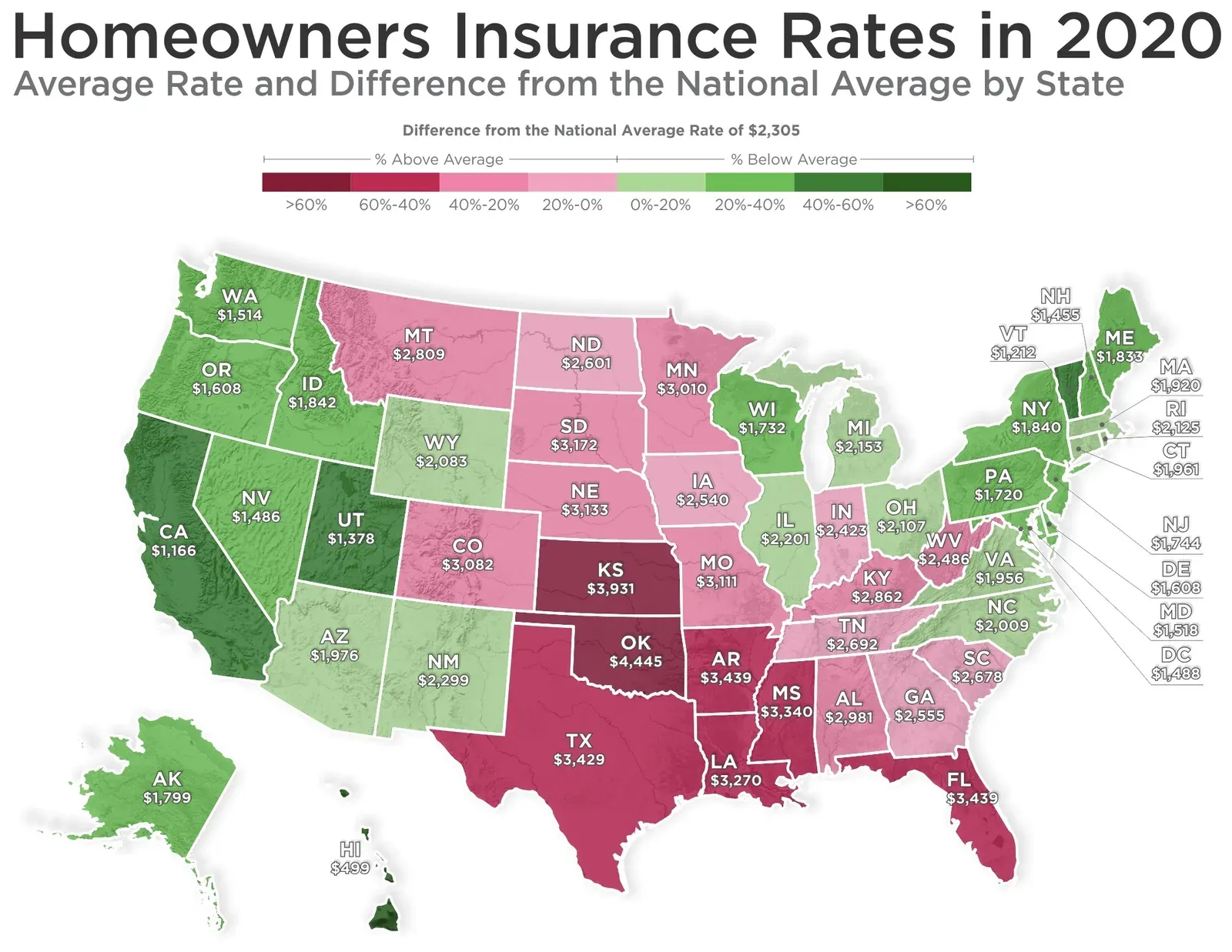
Georgia averaged $2,555 against a $2,305 national average, above both North Carolina at $2,009 and Arizona at $1,976. Some of that is hail and wind exposure across the state’s midsection.
So Georgia does not win every line. It wins the sum: the higher rent relative to price more than covers a few hundred dollars a year of tax and premium difference. A property that costs $120k less to buy and rents for nearly the same is not undone by an insurance bill.
One caveat on that map: it is 2020 data. Coastal catastrophe pricing has moved sharply since, mostly against Florida, Louisiana, and coastal Texas, and North Carolina’s coastal counties have not been spared.
5. The weather does not fight you
Arizona’s problem is heat and water. Summers past 110°F run air conditioning to failure years early, and HVAC replacement is one of the largest recurring capital costs in a rental. The Colorado River allocation question is a slow risk, not an acute one, but it is real.
North Carolina’s problem is the Atlantic. Hurricanes make landfall on the Outer Banks and the eastern plain regularly, and that flows into insurance and deductibles statewide.
Georgia’s population and nearly all of its investable inventory sit inland on the Piedmont plateau. Storms arrive weakened. Water is plentiful. Nothing about the climate systematically eats your building.
6. Room to run short and mid-term
If you want more than a standard 12 month lease, Georgia gives you more places to try it.
Mid-term demand, the 30 to 90 day tenant, is unusually deep in Atlanta: traveling medical staff for Emory, Northside, and the CDC orbit, plus rotating film crews. Those tenants pay a premium and treat the place well.
On short-term rentals, the City of Atlanta has tightened its rules, but Georgia is not Atlanta. Marietta, Alpharetta, Decatur and the wider suburbs remain workable, and Savannah and Blue Ridge are genuine vacation markets. North Carolina has been moving the other way in Charlotte and Asheville.
When the other two are the right answer
Georgia is not the answer for everyone.
Choose Arizona if you are optimizing for appreciation over cash flow, want the lowest property tax of the three, and can carry thinner monthly margins to get there.
Choose North Carolina if you want the lowest-default tenant profile you can buy. Raleigh-Durham’s research triangle produces highly educated, highly paid renters, and they pay on time. You will pay more per door and compete harder for it.
Choose Georgia if you want positive cash flow from month one, an entry price in the $250k to $350k range, the fastest path through a bad tenant in the country, and an economy diversified enough that no single layoff cycle empties your units.
For most people managing their own rentals, that third description is the job.
General information for landlords, not investment, tax, or legal advice. Prices, tax rates, insurance costs, and landlord-tenant law change and vary by county. Verify locally before you buy.